The current and chosen colours must be identified. The work needed for coverage is defined using the actual product and wall.
Changing a dark blue wall to a light colour is not sufficiently defined by ‘paint the living room’. The company needs to know which surface changes, its current finish and the colour you want afterwards. Photos and references help prepare the visit, although they do not replace checking the wall.
Start by describing the change. If you know the previous paint, keep its reference. If you can identify only the approximate colour, say so. Avoid choosing a similar trade name to fill in the detail: it could attribute a product to the wall that was never used.
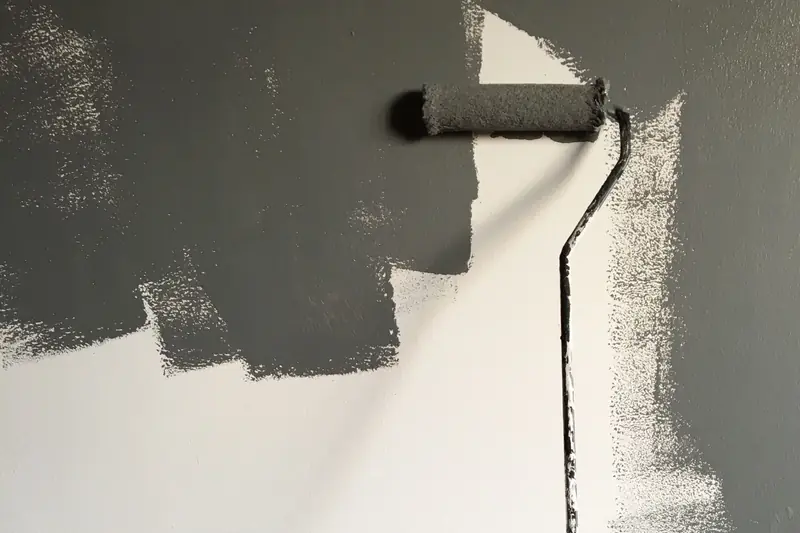
Record the change wall by wall
Use a recognisable name for each area: ‘sofa wall’ or ‘wall opposite the window’. State whether the whole wall is to change or part will stay. If the ceiling will also be painted, note it separately; changing the wall colour does not imply the ceiling is part of the job.
| Area | Known condition | Requested result |
|---|---|---|
| Sofa wall | Dark blue; previous product unknown. | Light colour, reference awaiting a sample. |
| Window wall | White; two localised repairs. | Same light colour as the sofa wall. |
| Ceiling | Left as it is. | Outside the job. |
In this example the colour changes, two repairs are prepared and the ceiling is excluded. These are scope decisions; they do not set the number of coats each wall needs.
Ask for a test that answers a question
Before testing, decide what you want to check: the chosen colour, coverage over the current background or both. Ask the company which product and preparation it will use for the test and whether the sample represents the solution proposed for the rest of the wall.
In the coverage conditions for Majestic Resist, Jotun warns that certain colours may need an extra coat. That instruction belongs to that product and its conditions of use. It is a reason not to apply one coat count to every paint or colour change.
Do not conclude that more coats are needed because a freshly applied sample still shows the background. Ask the company to assess the result according to the product system and timings. If different preparation or paint is proposed, the sample and proposal should reflect that change.
- Identify the starting colour with the degree of certainty you have.
- Choose a physical reference for the final colour and agree the finish.
- Confirm which question the test will answer.
- Keep a record of the preparation and product used.
- Ask for the final scope to reflect the assessment's findings.
Measure what changes without adding surfaces
If the wall is 3.6 metres wide and 2.5 high, its geometric area is 9 m²: 3.6 × 2.5. That calculation does not deduct openings or determine consumption. If there is a door, note its dimensions and agree the quote's measurement method rather than assuming a deduction.
Colour does not change that geometry. A coverage decision may change the application work, but does not turn a 9 m² wall into an 18 m² one when describing the surface. Coats and painted square metres must remain recognisably separate concepts.
When entering calculator data, use the area of the walls and ceilings you actually want painted. Do not count a wall again for each planned coat. The indicative calculation does not, on its own, assess every colour change, system or repair a company may propose.
Clarify what happens if the proposal changes
Record what is confirmed and what depends on the test or visit. If the coverage system is still outstanding, ask how it may affect the work and dates.
If you change from one light colour to another after accepting the sample, report it before application. Do not assume the previous quote can simply stay. Ask the company to confirm which conditions remain and which reference now becomes part of the job.
Once the decision is settled, keep the colour reference, finish, included walls, accepted sample and agreed tasks. You can then explain the change to anyone involved without relying on ‘a white like the one in the photo’.